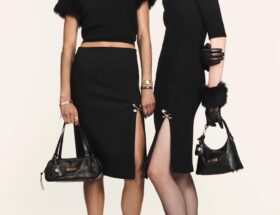
Fashion has always been about more than clothing. At its most powerful, a fashion house creates a particular way of seeing the world: a language of colour, materials, architecture, craftsmanship and attitude that extends far beyond the runway. It is perhaps no surprise, then, that some of the industry’s most influential names have begun to move into a territory that allows them to express that world more completely: hospitality.
From Armani’s hotels and restaurants to Bvlgari’s growing collection of properties, fashion brands are increasingly creating places where their identities can be experienced rather than simply worn. The shift reflects a broader transformation in luxury itself. The customer is no longer only buying an object; increasingly, they are buying access to a world.
From Fashion to Hospitality
The relationship between fashion brands and hospitality did not begin with the arrival of the luxury hotel. Restaurants and cafés offered fashion houses an earlier and more accessible way to extend their presence beyond the boutique.
Armani, for instance, entered the restaurant business in the late 1990s, developing dining spaces that brought together Italian cuisine and Giorgio Armani’s distinctive design philosophy. What might initially appear to be a simple brand extension was actually something more significant: an opportunity to make the Armani aesthetic part of everyday life.
A restaurant offers something a boutique cannot. Time.
A customer can spend an hour or an evening inside a brand’s environment without necessarily buying anything. They can return with friends, celebrate an occasion, share the experience and gradually develop a relationship with the house. The brand moves from something displayed in a shop window to something experienced in a social setting.
The hotel takes that idea much further.
When the Hotel Became a Brand World
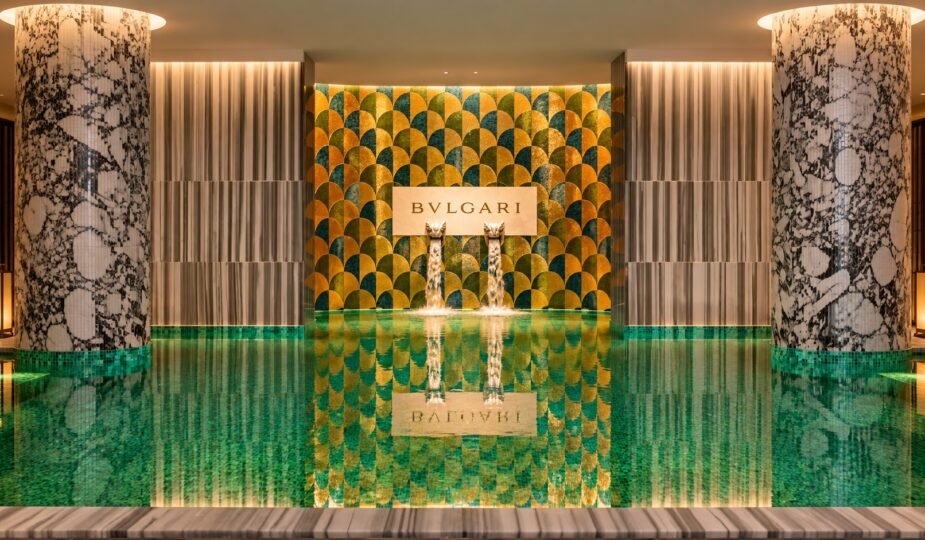
When Bvlgari opened its first hotel in Milan in 2004, the jewellery house entered a category that demanded much more than visual recognition. A hotel has to function for days, not minutes. Its architecture, rooms, restaurants, service, spa and atmosphere all have to communicate a coherent identity.
Bvlgari’s approach has been to bring its Roman heritage and Italian design language into hospitality while allowing each property to respond to its location. The result is not simply a hotel carrying the name of a jewellery house. It is an environment designed to extend the Bvlgari universe into another part of the customer’s life.
That distinction is important.
A successful fashion-brand hotel cannot simply place a familiar logo above the entrance. It has to answer a more difficult question:
What would this brand feel like if it were a place?
For Armani, the answer is expressed through restrained interiors, materiality and an emphasis on understated elegance. For Bvlgari, Roman heritage, Italian craftsmanship and jewellery-inspired sophistication become part of the environment. The hotel becomes a three-dimensional expression of the house, where architecture and service perform the role that clothing and accessories once played.
This is where hospitality becomes particularly valuable to luxury fashion.
A fashion collection has a season. A hotel is permanent. A campaign lasts for a moment; a hospitality experience can remain in someone’s memory for years. A handbag can communicate a brand’s identity visually, but a hotel can communicate it through every sense. Architecture establishes the first impression, the restaurant shapes the social experience, scent creates atmosphere, service establishes the tone and even the smallest details of a room can reinforce the same story.
The strongest fashion brands therefore aren’t simply putting their names into hospitality. They are translating their brand DNA into another medium.
Why Luxury Fashion Brands Want Hospitality
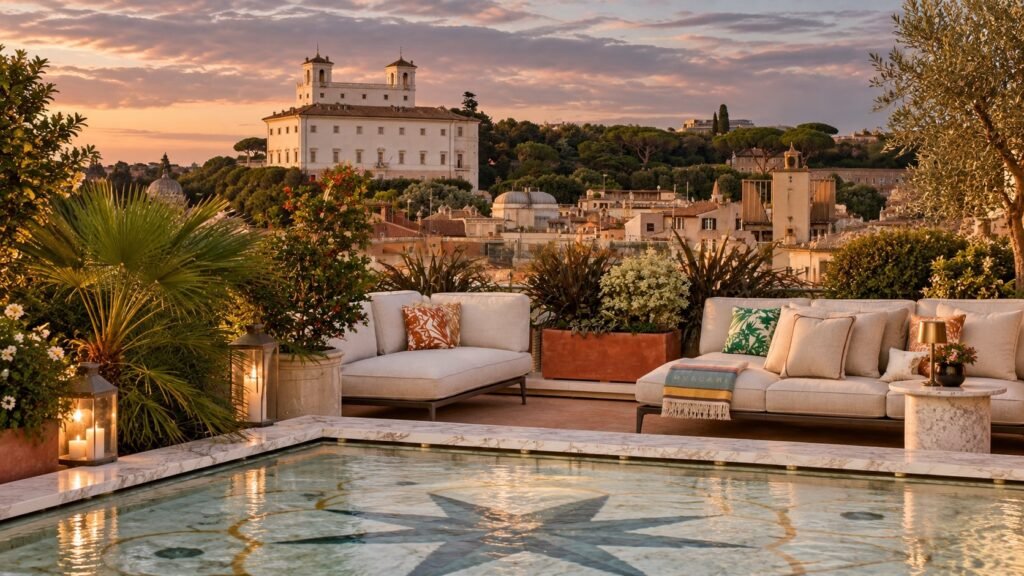
There is also a commercial logic behind this expansion.
Luxury fashion has historically depended on relatively occasional purchases, while hospitality creates repeated opportunities for interaction. A customer may visit a restaurant several times, stay at a hotel, return to its bar, attend an event or recommend the experience to someone else. The relationship becomes longer and more immersive.
This helps explain why the idea of the luxury ecosystem has become increasingly important.
Fashion, jewellery, beauty, interiors, restaurants, hotels and travel no longer need to exist as separate categories. Together, they can form a single universe around the customer.
For luxury houses, this creates another kind of value. Hospitality can introduce people to a brand without asking them to make a major purchase. Someone may first encounter a fashion house through a restaurant, hotel or café and later become interested in its other categories.
The relationship starts with experience.
That is particularly relevant as younger luxury consumers increasingly interact with brands through experiences, culture and social spaces rather than through traditional advertising alone.
The Risk of Putting a Logo on a Hotel
The expansion into hospitality is not automatically successful.
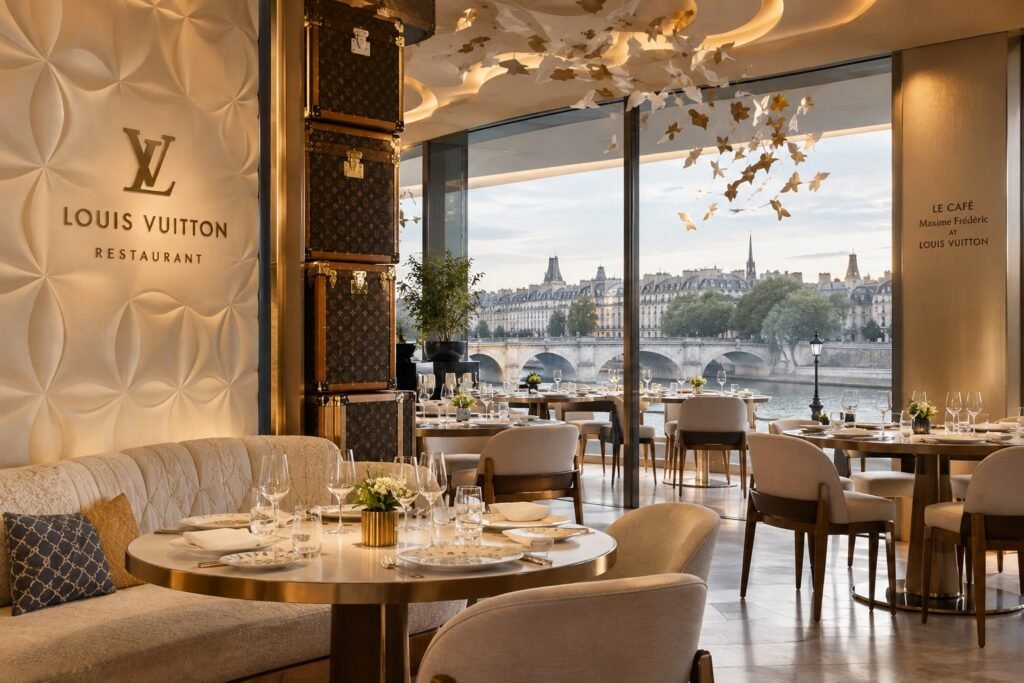
As more fashion brands enter restaurants, cafés and hotels, the experience can easily become predictable. A famous name alone is no longer enough.
The danger is branding without substance.
If a hotel could remove the fashion house’s name and nothing about the experience would change, the connection is probably superficial.
The strongest projects work differently. Their architecture, food, service and atmosphere feel connected to the brand’s identity without constantly announcing it.
That is the difference between brand extension and brand experience.
A fashion house should not simply decorate a hotel with its visual codes. It should ask what its values mean when translated into hospitality.
What does its idea of elegance look like in a room?
What does its craftsmanship mean in a restaurant?
How does its attitude translate into service?
What does its heritage feel like when a guest spends three days inside it?
These questions are much harder to answer than simply designing a beautiful lobby. But they are also what can make a fashion-led hospitality project distinctive.
The Rise of the Luxury Ecosystem
The movement from fashion into hospitality ultimately reveals something larger about the changing meaning of luxury.
For much of the twentieth century, luxury was closely associated with ownership: the dress, the watch, the jewellery, the handbag. Today, experience has become an equally important form of value.
People increasingly want to know not only what a brand makes, but what kind of world it can offer them.
A hotel can answer that question more powerfully than almost any other format.
It allows a customer to sleep inside the brand, dine inside it, experience its design, interact with its service culture and carry the memory home. The fashion house is no longer simply dressing the customer. It is beginning to design the environment around them.
That is perhaps the most interesting development in luxury hospitality.
The boundaries between fashion, travel, dining, design and lifestyle are becoming less distinct. A fashion house can now be a place to stay, a restaurant to visit, a destination to travel to and a cultural experience to remember.
Fashion’s Next Address
The fashion house of the future may look less like a traditional fashion company and more like a cultural world with many doors into it.
The boutique is one door.
The restaurant is another.
The hotel may be the most immersive one of all.
Fashion brands entered hospitality because hospitality offers something products alone cannot: time, atmosphere and experience.
The real opportunity, however, is not simply to sell another room or another dinner. It is to make the brand itself feel larger, more immersive and more difficult to separate from a particular way of living.
The most successful fashion-hospitality concepts will therefore not be the ones with the biggest logo or the most extravagant interiors. They will be the ones where the customer can walk through the door and immediately understand what the brand believes luxury should feel like.
And perhaps that is where luxury is heading next: from something we wear and own to something we can actually enter.
Fashion is no longer limited to the wardrobe. Through hotels, restaurants and other hospitality spaces, luxury houses are turning their identities into places and experiences. The next generation of luxury branding may be less about asking “What do you own?” and more about asking “What world do you belong to?”
Image credits: Images via respective brands, photographers and © respective copyright owners. Used for commentary and critique.
Discover more about Luxury Hospitality – What Makes a Hotel Brand Truly Luxury?