PARIS At a time when artificial intelligence dominates conversations across industries, luxury leaders are sending a clear message: innovation only matters when it enhances excellence.
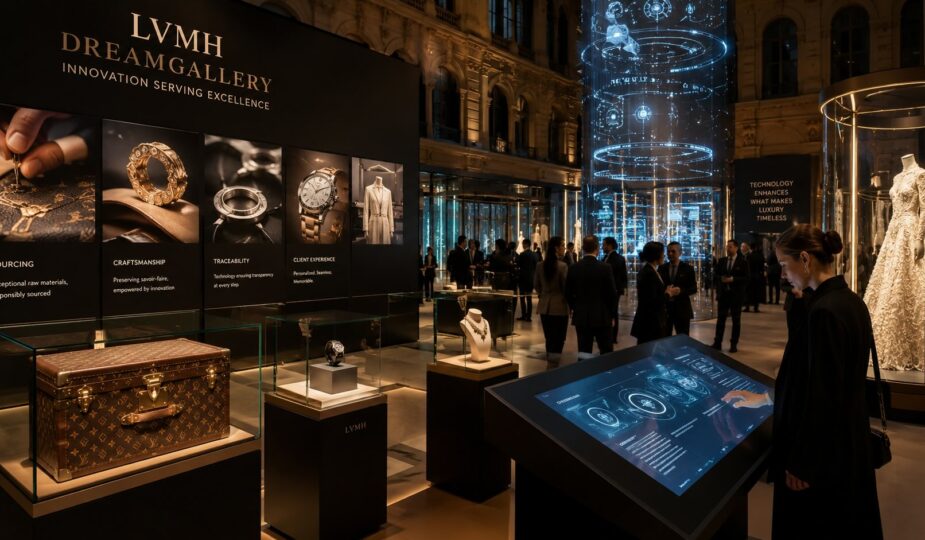
That philosophy was on full display at VivaTech 2026, where luxury group LVMH once again positioned itself at the intersection of heritage, craftsmanship, and emerging technology. Through its immersive DreamGallery experience and the annual LVMH Innovation Award, the group showcased how technology is becoming increasingly embedded across the luxury value chain.
The event offered a glimpse into how the luxury industry is evolving its relationship with innovation moving beyond digital experimentation toward technologies that strengthen creativity, transparency, operational excellence, and customer experience.
From Digital Transformation to Value Creation
For much of the past decade, luxury brands focused their technology investments on e-commerce, social media, and digital marketing.
The priorities emerging at VivaTech 2026 suggest a broader transformation is underway.
Rather than concentrating solely on customer acquisition and online sales, luxury companies are increasingly investing in technologies that support product development, supply chain visibility, employee capabilities, and long-term brand value.
At the center of LVMH’s exhibition, the DreamGallery illustrated this shift. The experience highlighted how innovation is being applied across sourcing, craftsmanship, traceability, quality assurance, and client engagement.
The message was clear: innovation is no longer a standalone initiative. It is becoming integrated throughout the luxury ecosystem.
Traceability Moves to the Forefront
Among the strongest signals from this year’s event was the growing importance of supply chain transparency.
Fairly Made, a French startup specializing in traceability and environmental impact measurement, received the Best Impact Award at the LVMH Innovation Award ceremony. The recognition reflects a broader industry trend as luxury brands respond to increasing consumer expectations around transparency and responsible sourcing.
Historically, luxury value has been built around craftsmanship, heritage, rarity, and creativity.
Today, transparency is emerging as an additional pillar of trust.
As regulations evolve and sustainability expectations increase, visibility across the supply chain is becoming a strategic business priority rather than a compliance exercise.
Artificial Intelligence Enters a New Stage
Artificial intelligence remained one of the dominant themes throughout VivaTech, but the tone of the conversation has noticeably shifted.
In previous years, luxury executives approached AI with cautious curiosity. Discussions largely focused on possibilities and future potential.
At VivaTech 2026, the focus moved toward implementation.
Across the industry, brands are exploring AI applications for employee training, content production, multilingual communication, operational efficiency, and customer service. The emphasis is increasingly on practical use cases that improve performance while preserving the human expertise and emotional value that define luxury.
For luxury companies, the challenge is not adopting AI. It is ensuring that technology enhances creativity rather than diluting it.
Technology Supporting Craftsmanship
One of the recurring themes throughout the event was the relationship between innovation and savoir-faire.
Luxury brands face a unique challenge compared to other industries. While many businesses use technology primarily to drive efficiency, luxury must protect the craftsmanship and creativity that underpin desirability.
As a result, innovation strategies are increasingly focused on supporting artisans, preserving expertise, improving product quality, and enhancing storytelling.
Technology is being positioned as a tool that strengthens human capabilities rather than replacing them.
This distinction may become one of the defining characteristics of luxury innovation in the years ahead.
The Next Chapter for Luxury
The discussions at VivaTech 2026 suggest that luxury’s future will be shaped by a more sophisticated understanding of innovation.
The industry’s leaders are no longer asking how much technology they should adopt.
Instead, they are asking how technology can reinforce the qualities that make luxury unique.
Whether through AI-powered operations, enhanced traceability, improved customer experiences, or the preservation of craftsmanship, innovation is increasingly being evaluated through the lens of value creation rather than novelty.
For luxury brands navigating a rapidly changing landscape, that shift may prove more important than any single technological breakthrough.
The future of luxury will not belong to the brands with the most technology.
It will belong to the brands that use technology most effectively to elevate creativity, trust, craftsmanship, and excellence.







[…] VivaTech 2026 Shows How Luxury Is Redefining Innovation […]