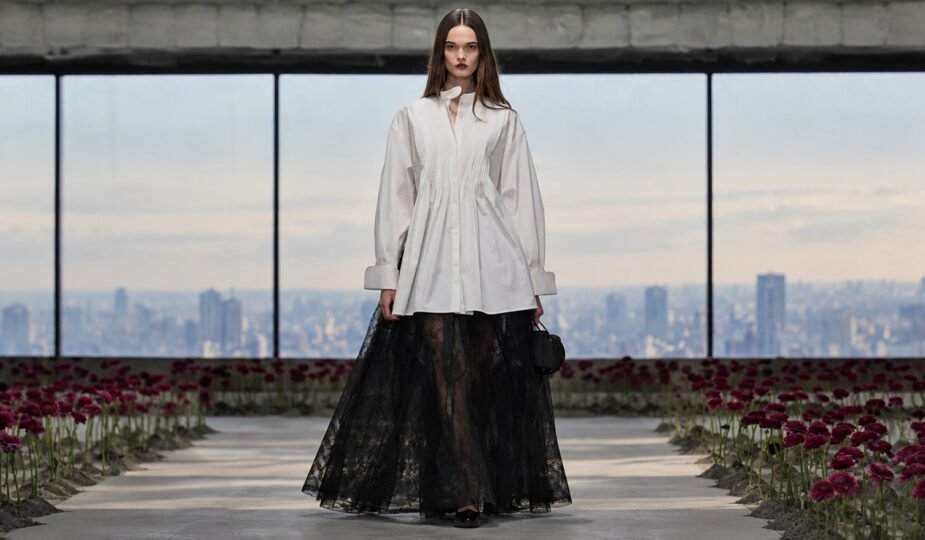
New York Fashion Week Spring/Summer 2027 begins tomorrow, September 10. But beyond the numbers, this season raises a bigger question: what does New York want to say about fashion now?
New York is preparing to become the first major stage of the Spring/Summer 2027 fashion season, with the official CFDA schedule running from September 10 through September 15. The calendar features 70 runway shows and designer presentations, bringing together some of the most established names in American fashion alongside returning designers and a new generation of international talent.
Yet SS27 feels less like a routine fashion-week calendar and more like a moment of transition. There are new creative appointments, designers returning to the city, international labels choosing New York as a stage, and emerging names looking to establish themselves within the American fashion conversation.
The question, therefore, is not simply who is showing. It is what New York’s fashion identity looks like in 2026.
OFFICIAL NEW YORK FASHION WEEK SCHEDULE SEPTEMBER 2026
A New Beginning at Diane von Furstenberg
The official week opens with one of its most significant changes.
On September 10, Henry Zankov makes his debut as artistic director of Diane von Furstenberg, bringing a new creative perspective to a house whose identity is deeply connected to New York fashion. The appearance also marks Diane von Furstenberg’s return to the official runway schedule after years away.
For Zankov, the challenge is not simply to introduce a new collection. It is to work with an established vocabulary without allowing heritage to become a constraint.
That makes the opening show particularly symbolic. New York is beginning its new season with a designer asking a familiar fashion name to speak in a different voice.
Heritage Still Has a Place
For all the emphasis on newness, SS27 remains firmly connected to the designers who have shaped New York’s fashion identity.
The official calendar includes Anna Sui, Carolina Herrera, Michael Kors Collection, Proenza Schouler, Prabal Gurung, Tory Burch, Ulla Johnson, Khaite, Christian Siriano, Calvin Klein Collection, Altuzarra, Collina Strada and Eckhaus Latta, among many others.
Their presence matters because New York fashion has never been defined by a single aesthetic. It has historically moved between polished American sportswear, downtown experimentation, tailoring, glamour and increasingly diverse cultural perspectives.
SS27 therefore offers an interesting test: can established New York houses evolve without losing the codes that made them relevant in the first place?
That tension between recognition and reinvention may become one of the defining stories of the season.
New York Is Becoming More International
Perhaps the clearest sign of change is the number of designers bringing perspectives from outside the traditional New York fashion system.
Magda Butrym and Conner Ives are among the notable newcomers to the official schedule. Butrym, who has built her reputation through presentations in Paris, is making her New York runway debut, while Conner Ives is bringing his London-based perspective to the city for his first NYFW show.
Sabyasachi Mukherjee is also among the new additions to the official calendar, further expanding the international dimension of the week.
This is more than a matter of geography.
New York has always been an important commercial gateway into the American market. But its role is increasingly becoming cultural as well. Designers do not necessarily need to be New York-based to see the city as a place where their work can gain a different kind of visibility.
That makes SS27 less about defining American fashion in isolation and more about examining how American fashion interacts with the rest of the world.
The Next Generation Is Already Here
Alongside established houses, the calendar gives considerable space to emerging designers.
The official schedule includes Benjamin Seidler, Grey’s by Emily Grey, High Sport by Alissa Zachary, Hikari no Yami by Jakarie Whitaker, Max Esmail, Patrick Taylor and Zaldy. Several CFDA/Vogue Fashion Fund finalists are also participating, including Bad Binch TongTong, Jamie Haller and Milamore, alongside returning finalists such as Aisling Camps, Amir Taghi, Lii by Zane Li and Zoe Gustavia Anna Whalen.
This is where the future of NYFW may be most visible.
The established names provide continuity, but emerging designers provide uncertainty. Their collections have less obligation to repeat familiar formulas, giving them more room to experiment with identity, construction, styling and the relationship between fashion and culture.
For a fashion week trying to remain relevant, that creative unpredictability is essential.
September 9: The Fashion Week Before Fashion Week
Technically, the official NYFW calendar begins September 10. But the city is already moving.
On September 9, Ralph Lauren, Coach, Cult Gaia, Rachel Comey, J. Press and Libertine are scheduled to present collections ahead of the official opening. Rachel Comey is also marking 25 years in business.
Ralph Lauren’s early presentation is particularly significant. Few designers embody the idea of American fashion heritage as strongly, making his presence an appropriate prelude to a week that is simultaneously looking backward and forward.
In practical terms, NYFW begins September 10.
In fashion terms, the conversation has already started.

What We Are Watching at SS27
01 — Can heritage become new again?
Diane von Furstenberg’s new creative chapter provides the clearest example. Across the schedule, established brands will need to demonstrate that heritage can evolve rather than simply repeat itself.
02 — How international can New York become?
The arrival of Magda Butrym, Conner Ives and Sabyasachi suggests that New York’s influence is increasingly working in both directions. The city is not only exporting designers; it is attracting them.
03 — Which emerging names will break through?
The most important discovery of fashion week may not come from the biggest house. It may come from a designer with a smaller runway and a stronger point of view.
04 — What happens to American sportswear?
From Ralph Lauren and Tommy Hilfiger to Michael Kors and Tory Burch, American sportswear remains central to New York’s identity. SS27 will show whether those familiar codes can still feel contemporary.
05 — Will personality return to the runway?
Early fashion forecasting points toward stronger silhouettes, expressive styling and a move away from overly restrained dressing. New York will be one of the first places where those ideas are tested at scale.
A Fashion Week Shaped by Its Moment
There is another reason this particular edition deserves attention.
The September calendar is taking place alongside significant cultural dates. On September 11, the official schedule begins at 10:00 a.m. out of respect for the 25th anniversary of September 11. The CFDA has also introduced measures around the logistics of the week, including a shuttle service designed to help fashion-week attendees move around the city.
The CFDA’s fur-free policy also takes effect for the September 2026 Official NYFW Schedule, meaning brands participating in the official calendar can no longer use animal fur, with a limited exemption for fur obtained by Indigenous communities through traditional subsistence hunting.
These details may sit outside the runway itself, but they demonstrate how fashion week increasingly reflects conversations happening beyond clothing.
The Final Word Belongs to Thom Browne
If Diane von Furstenberg provides the opening question, Thom Browne provides the closing statement.
The designer will close the official NYFW schedule on September 15, bringing the six-day calendar to an end.
It is an appropriate finale for a week built around the relationship between American fashion heritage and reinvention. Browne has spent much of his career challenging conventional ideas of proportion, tailoring and American dress while remaining deeply connected to the language of American fashion.
His closing position gives SS27 a fitting structure: a new creative chapter at the beginning, and one of America’s most distinctive fashion voices at the end.
What New York Has to Prove
New York Fashion Week SS27 arrives with a strong roster, but its real significance will only become clear once the clothes walk down the runway.
The numbers are impressive: 70 official runway shows and designer presentations across September 10–15, alongside a much broader citywide calendar of events.
But numbers alone do not make a fashion week important.
The more interesting story is the tension underneath them: established houses versus new voices, American heritage versus international influence, commercial relevance versus creative experimentation.
That is what makes SS27 worth watching.
New York does not need to prove that it can host another fashion week. It needs to show why the world should still be paying attention to what happens here.
And tomorrow, the answer begins on the runway.
Foundation of the Grand Prix d’Horlogerie de Genève: 7 Essential Facts








[…] New York Fashion Week SS27: 70 Shows and a New Chapter for New York Fashion […]
[…] New York Fashion Week SS27: 70 Shows and a New Chapter for New York Fashion […]