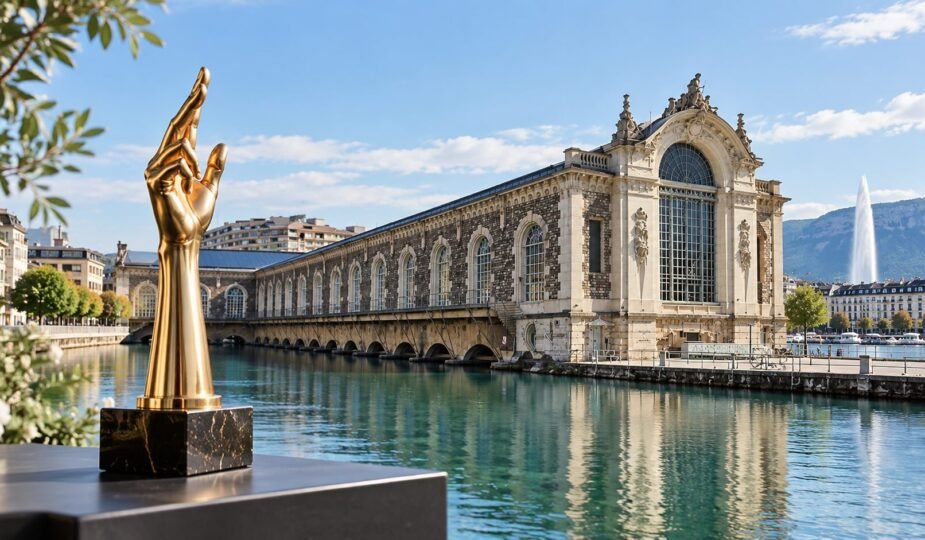
Behind every nominated timepiece, international exhibition and Aiguille d’Or trophy is an institution whose role extends far beyond selecting the winners of an annual competition.
The Foundation of the Grand Prix d’Horlogerie de Genève is the institutional force behind the GPHG, one of contemporary watchmaking’s most influential international awards programmes. Created to provide a long-term framework for the competition, the Foundation has overseen the GPHG since 2011 as a recognised public-interest organisation, with a mission centred on celebrating exceptional contemporary creations and promoting the watchmaking art worldwide.
That role is increasingly significant. Modern watchmaking is shaped by powerful luxury groups, historic maisons, independent workshops, collectors, retailers and a growing global audience. The Foundation brings these different worlds into a shared international conversation about creativity, craftsmanship and excellence.
The trophies may attract the headlines, but the institution behind them is what gives the GPHG its continuity, international reach and cultural purpose.
1. The Foundation of the Grand Prix d’Horlogerie de Genève Gives the Awards a Permanent Structure
The Grand Prix d’Horlogerie de Genève was created in 2001. As the competition developed into an increasingly important event on the international watchmaking calendar, it required a more permanent institutional structure to support its future.
Since 2011, the Foundation of the Grand Prix d’Horlogerie de Genève has overseen the GPHG as a public-interest organisation.
This distinction matters because the Foundation is not simply a private marketing platform for one watch company or luxury group. Its mission is broader: to highlight and reward remarkable contemporary watchmaking creations while contributing to the international influence of the watchmaking art.
The Foundation therefore provides continuity from one edition to the next.
Brands change. Designers move between maisons. Market trends evolve. New independent watchmakers emerge while established names redefine their creative direction. The Foundation remains the institutional framework connecting these annual moments into a larger history of contemporary horology.
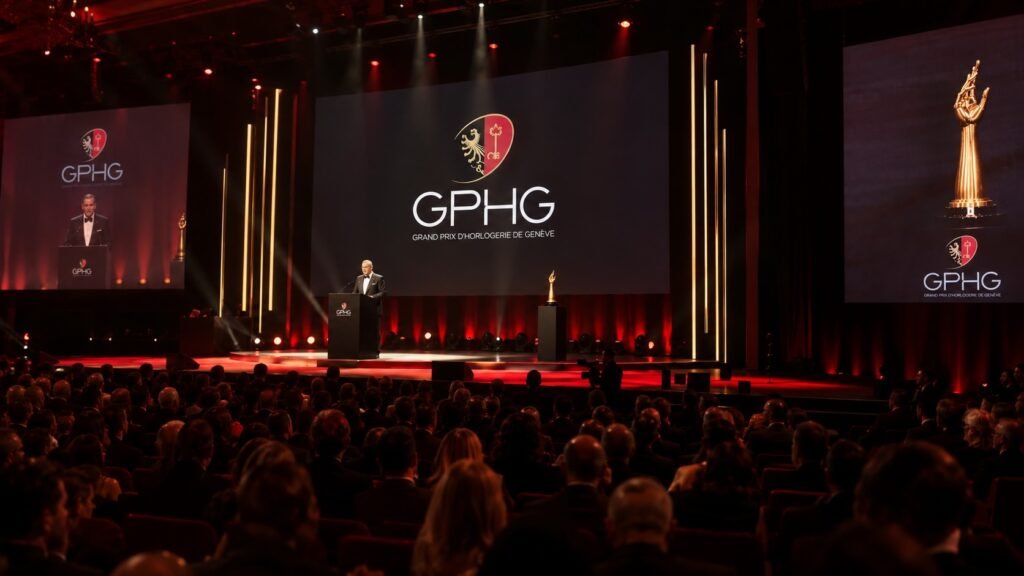
2. Its Mission Goes Beyond Choosing the Year’s Best Watches
It would be easy to think of the GPHG simply as an annual awards ceremony.
But the Foundation of the Grand Prix d’Horlogerie de Genève has a wider mission.
The awards are only one part of its work. Through the competition, international exhibitions, the GPHG Academy and cultural outreach, the Foundation helps promote watchmaking as both a technical discipline and a cultural form.
This is important because watchmaking occupies an unusual position in luxury.
A watch can be an engineering achievement, a design object, a piece of jewellery, a work of artistic craftsmanship or a highly personal expression of a watchmaker’s ideas. The Foundation’s role is to create a platform broad enough to recognise these different forms of creativity.
The GPHG therefore does not celebrate one definition of excellence.
A minimalist time-only watch can stand alongside an extraordinary chiming mechanism. An independent creator can compete in the same wider programme as an international luxury maison. A mechanical clock can share the stage with a contemporary sports watch or a high-jewellery creation.
The Foundation’s larger purpose is to keep these different expressions of watchmaking visible within the same international conversation.
3. Geneva Remains Its Home, but the Mission Is Global
The identity of the GPHG is deeply connected to Geneva, one of the world’s most important centres of fine watchmaking.
Yet the Foundation’s ambition reaches far beyond Switzerland.
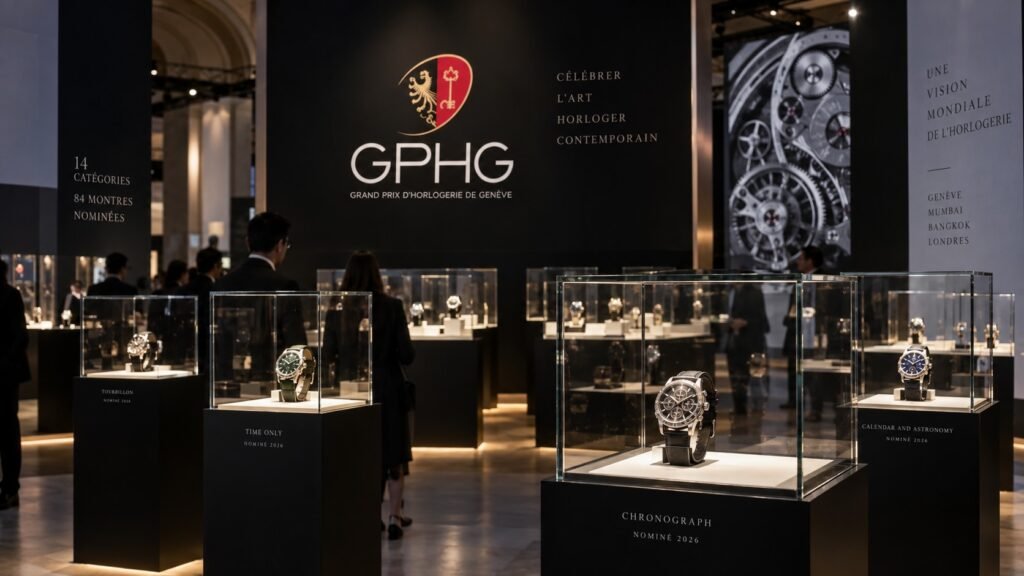
Each autumn, nominated timepieces travel internationally through a programme of exhibitions designed to introduce contemporary watchmaking to collectors, enthusiasts, industry professionals and the wider public.
The 2026 edition demonstrates the scale of this international approach.
From 320 timepieces entered by 194 brands, the GPHG Academy selected 84 nominated creations across 14 categories. These nominees include 78 wristwatches and six mechanical clocks, all competing for one of 19 prizes, including the prestigious Aiguille d’Or Grand Prix.
The international exhibition programme begins in Mumbai before continuing to Bangkok, Geneva and London.
This travelling format is one of the most important aspects of the Foundation’s work.
The nominated watches do not remain hidden behind the closed doors of an awards system. They become part of a public international exhibition programme.
In this sense, the GPHG becomes a travelling snapshot of contemporary watchmaking—bringing together watches that might otherwise only be seen separately in boutiques, private collections or specialist events.
4. The GPHG Academy Has Expanded the Foundation’s International Reach
One of the most significant developments in the modern structure of the GPHG has been the creation of the Academy.
Established in 2020, the GPHG Academy brings together experienced figures from different sectors of the watchmaking world. Its purpose is not simply ceremonial. Academy members participate directly in the selection of watches competing in the awards.
The Academy is governed by the Foundation and operates around values including neutrality, independence and universality.
Its members participate in the selection process and also act as international ambassadors for the GPHG.
For the 2026 competition, the Academy played a central role in selecting the nominated timepieces during the first round of voting. It will also participate in the final vote alongside the specialist Jury.
The Academy’s digital vote accounts for one-third of the final result, while the Jury physically evaluates the nominated watches before the winners are determined.
This structure reflects an important principle behind the Foundation’s approach.Contemporary watchmaking is no longer defined by one geography or one professional group.
The industry includes master watchmakers, designers, journalists, retailers, collectors, historians and technical specialists. By bringing together a wider international community, the Academy expands the conversation around what deserves recognition.
5. The Foundation Creates Visibility for Independent Watchmakers
One of the most valuable roles of the Foundation of the Grand Prix d’Horlogerie de Genève is its ability to create visibility.
For a major luxury maison, international recognition may reinforce an already established reputation.For an independent watchmaker, however, a nomination can have a very different significance.
A small independent workshop may not have a global advertising budget, a network of boutiques or the marketing resources of an international luxury group. Yet its work can still compete within the same GPHG programme.
This creates a rare form of visibility.The quality of an idea, the originality of a mechanism or the strength of a design can enter the international conversation alongside creations from some of the industry’s most powerful names.
That does not remove the differences between large and small brands. Resources, distribution and global recognition remain profoundly unequal.But the GPHG creates a platform where independent creativity can receive serious institutional attention.
This is one reason the Foundation matters beyond the annual prize list.It helps ensure that contemporary watchmaking is not defined exclusively by commercial scale.
6. The Annual Competition Has Become a Record of Contemporary Watchmaking
Every edition of the GPHG captures something about the state of watchmaking at a particular moment.
The nominated watches reveal which ideas are gaining momentum.
Are watchmakers returning to classical proportions? Are independent creators becoming more influential? Are luxury maisons investing more seriously in complicated mechanics? Is artistic craftsmanship experiencing a revival?
The Foundation does not answer these questions through a written manifesto. It answers them through the watches selected for recognition.
Over time, this gives the competition a cultural and archival dimension.The winners and nominees become part of a record showing how watchmaking has changed.
A particular decade may be remembered for extreme mechanical experimentation. Another for the return of traditional craftsmanship. Another may reveal the growing importance of independent watchmakers or the transformation of jewellery maisons into increasingly ambitious horological creators.
The Foundation’s annual work therefore has a quietly curatorial role.
It does not operate as a museum in the conventional sense, but the watches selected each year contribute to the documentation of contemporary horological culture.
Image placement: International GPHG exhibition featuring nominated timepieces
7. The Foundation Gives Meaning to the Aiguille d’Or
The Aiguille d’Or Grand Prix is the most famous distinction associated with the GPHG.
It represents the highest recognition awarded during the annual ceremony and is often viewed as the competition’s ultimate honour.Yet the meaning of the trophy depends on the wider system created by the Foundation.
Before one watch receives the Aiguille d’Or, hundreds of watches may have entered the competition. The Academy participates in the selection process. Nominated watches travel internationally. A specialist Jury physically evaluates the finalists before the final results are determined.
The prize is therefore the visible conclusion of a much larger institutional process.
For the 2026 edition, the journey began with 320 entered models from 194 brands before the field was reduced to 84 nominated timepieces.
Those watches represent a remarkably broad range of contemporary watchmaking.
Technical complexity sits alongside aesthetic restraint. High jewellery exists beside independent experimentation. Sports watches share the programme with mechanical clocks and artistic creations.
The Aiguille d’Or may be the most visible symbol of success, but the Foundation’s larger achievement is the creation of a system capable of bringing these radically different expressions of watchmaking into one international programme.
A Cultural Institution in a Commercial Industry
Watchmaking is undeniably a luxury business.
Brands compete for collectors, retail space, cultural visibility and commercial success. Major luxury groups have enormous resources, while independent creators often operate with comparatively limited means.
The Foundation introduces a different perspective into this environment.Its purpose is not to determine which brand sells the most watches or has the largest advertising campaign.
Instead, the competition asks which contemporary creations deserve recognition.
Of course, judging creativity will always involve personal taste. No awards system can be entirely free from debate, and participation in the GPHG remains voluntary.
But the importance of the Foundation lies in the conversation it creates.
It provides a space where craftsmanship can be discussed alongside innovation. Where established maisons and independent watchmakers can enter the same wider programme. Where watches are considered not only as luxury products but as expressions of technical knowledge, design and human imagination.
Why the Foundation Matters to Watchmaking Today
The luxury industry has become increasingly global and increasingly driven by attention.
In that environment, institutions capable of creating cultural recognition play an important role.
The Foundation of the Grand Prix d’Horlogerie de Genève provides one of watchmaking’s most prominent international platforms for recognising creativity beyond commercial visibility alone.
Its influence comes from the ecosystem it brings together.
The Foundation connects brands with independent creators. It connects Geneva with international audiences. It connects specialist expertise with the wider participation of the Academy.
Most importantly, it gives contemporary watchmaking an annual moment of reflection.
Which ideas matter now?
Which skills deserve recognition?
Which watchmakers are pushing the industry forward?
And which creations might still be remembered years from now?
The answers change every year.The institution asking those questions remains.
The Radiance Haute Takeaway
The Foundation behind the GPHG is far more than the organisation responsible for presenting an annual awards ceremony.
It provides the structure, continuity and international platform that allow the competition to function as a wider celebration of contemporary watchmaking.
The trophies may be the most visible part of the story. But the Foundation’s deeper contribution is the world it creates around thembringing together established maisons, independent creators, specialists and audiences to consider what excellence in watchmaking means today.
In an industry where heritage is often measured in centuries, the ability to recognise what deserves attention now may be one of its most important roles.
Related Reading
- What Is the GPHG?
- How Does the GPHG Competition Work?
Official Sources
For readers who want to explore the institution and its current programme directly, see the official GPHG Foundation, Academy and 2026 edition pages.
check here nominated-timepieces 2026
Images © respective photographers and copyright owners. Used for editorial commentary and critique where applicable.








[…] Foundation of the Grand Prix d’Horlogerie de Genève: 7 Essential Facts […]