Every year, the watch industry gathers around a question that is far more complicated than it first appears: what does excellence in contemporary watchmaking actually look like?
The Grand Prix d’Horlogerie de Genève, better known as the GPHG, has become one of the most influential institutions attempting to answer it. Often described as the “Oscars of watchmaking,” the annual awards bring together some of the world’s most accomplished watchmakers, established luxury houses and independent creators in a competition designed to recognise exceptional contemporary timepieces.
But reducing the GPHG to an awards ceremony misses its wider importance. Behind the trophies is a global platform for craftsmanship, mechanical innovation, design and artistic expression. In an industry shaped by centuries of heritage yet constantly searching for new relevance, the GPHG has become a record of what modern watchmaking chooses to celebrate.
The Grand Prix d’Horlogerie de Genève: More Than an Awards Ceremony
The GPHG was established in 2001 and later placed under the Foundation of the Grand Prix d’Horlogerie de Genève, created in 2011. Its purpose extends beyond selecting an annual list of winners. The Foundation promotes watchmaking internationally while providing a platform for contemporary creations across different areas of horology.
Each year, watches compete in categories that reflect the extraordinary range of modern watchmaking. A minimalist time-only watch may stand alongside a highly complex astronomical creation, while a technically ambitious chronograph can compete in the same wider programme as a jewellery watch or a piece dedicated to artistic craftsmanship.
This breadth is one of the GPHG’s greatest strengths. It recognises that watchmaking cannot be measured by complexity alone.
A watch can be remarkable because of its movement. Another because of its proportions. Another because of the way a centuries-old craft has been translated into a contemporary object.
The GPHG attempts to create space for all of these ideas.
How the GPHG Chooses Its Winners
The competition follows a multi-stage process involving the GPHG Academy and a final Jury.
Watches are entered into the competition by participating brands, while Academy members can also propose watches they believe deserve consideration. Following an initial selection process, Academy members vote to determine the official nominees.
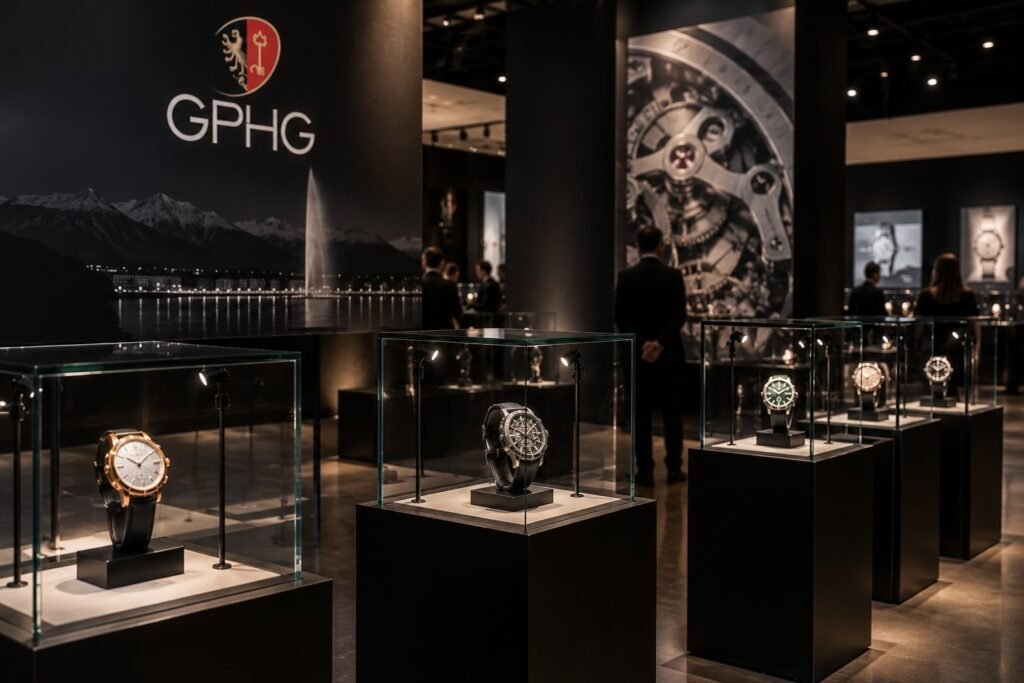
Those nominated watches then become part of the international GPHG programme, including exhibitions that present contemporary watchmaking to audiences beyond Geneva.
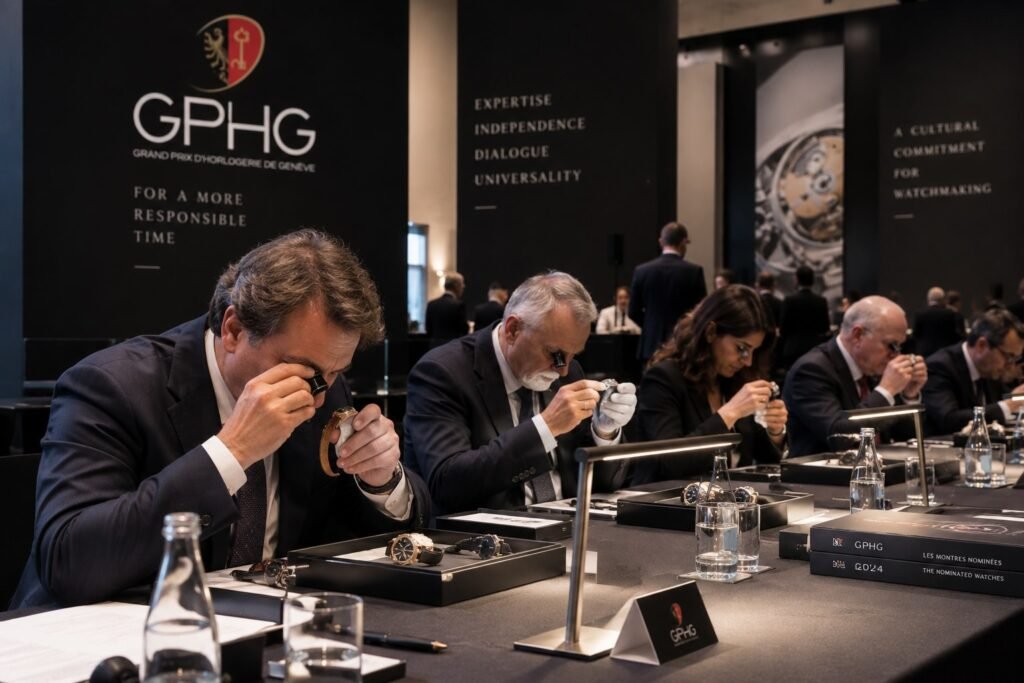
The final stage brings together a specialist Jury that physically examines the nominated watches before voting takes place. The wider Academy also participates in the final selection process under the regulations of the annual competition.
The system matters because it attempts to balance two different perspectives: broad recognition from the international watch community and concentrated evaluation by specialist experts.
The result is not a simple popularity contest. Nor is it purely a technical ranking. A winning watch must exist within a much more complex conversation involving innovation, design, craftsmanship and cultural relevance.
The Aiguille d’Or and the Meaning of Recognition
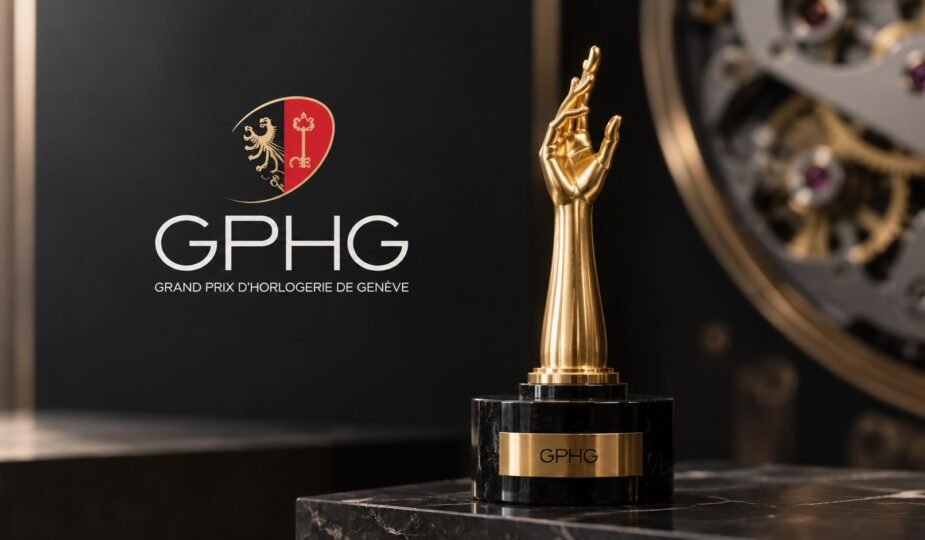
At the centre of the GPHG is the Aiguille d’Or Grand Prix, the competition’s highest honour.
The name translates as “Golden Hand,” referring to the hand of a watch, and the award represents the ultimate distinction of the annual competition.
Yet the importance of winning extends far beyond a trophy.
For an established luxury house, a GPHG prize can reinforce technical credibility and creative leadership. For an independent watchmaker, however, recognition can be transformational. A small manufacturer without a global advertising budget or extensive retail network can suddenly enter the international conversation alongside some of the industry’s most powerful names.
This ability to create visibility is one of the GPHG’s most important contributions to contemporary watchmaking.
Luxury is often shaped by visibility and access. The brands with the greatest resources naturally command the greatest attention. The GPHG does not completely remove this imbalance, but it can create a different kind of stage—one where the strength of a watch itself can become part of the story.
A Mirror of Contemporary Watchmaking
Perhaps the most interesting way to understand the GPHG is not as a definitive answer to the question of which watch is “best.”
Instead, it can be viewed as a mirror.
Every year’s nominations and winners reveal something about the industry’s current priorities. Some years may highlight extraordinary mechanical innovation. Others may reveal renewed interest in classical proportions, independent creativity or traditional decorative arts.
The awards also show how broad the definition of luxury watchmaking has become.
Technical complexity remains important, but contemporary collectors increasingly respond to individuality, design and authorship. A watch does not necessarily need to contain the most complicated movement to become culturally significant. Sometimes its importance lies in the clarity of an idea.
This is particularly visible in the growing influence of independent watchmakers. Freed from some of the commercial expectations faced by major luxury groups, independent creators often experiment with unconventional design, unusual mechanisms and highly personal approaches to craftsmanship.
The GPHG has become one of the places where these independent voices can gain international recognition.
Why the GPHG Matters Beyond Geneva
Although the GPHG is rooted in Geneva, its significance is increasingly international.
The Academy brings together voices from different parts of the global watch world, while the nominated watches are presented through international exhibitions. The competition therefore operates not only as a Swiss ceremony but as a platform for global watchmaking culture.
Its influence also extends into the market.
Awards can shape collector attention, introduce retailers and journalists to emerging brands and strengthen the reputation of established manufacturers. More subtly, the annual results contribute to the industry’s wider conversation about what deserves recognition.
In this sense, the GPHG is both a celebration and a form of cultural editing.
Every prize says something.
It says that a particular approach to design, mechanics or craftsmanship deserves to be noticed at this moment in time.
Of course, no awards system can claim complete objectivity. Participation is voluntary, and some major brands do not compete. Judging mechanical artistry inevitably involves personal taste.
But perhaps this is precisely why the GPHG remains interesting.
It does not produce an unquestionable ranking of every watch created in a given year. Instead, it creates a conversation about excellence—and invites the industry to decide which ideas deserve to move forward.
The Future of Watchmaking, One Year at a Time
The Grand Prix d’Horlogerie de Genève ultimately matters because watchmaking is more than the measurement of time.
At its highest level, it is a meeting point between engineering, design, history and human imagination.
A great watch can preserve centuries of technical knowledge while proposing something entirely new. It can be a precision instrument, a piece of jewellery, a mechanical sculpture or an intensely personal object designed to be worn every day.
The GPHG exists to recognise these different possibilities.
For established houses, it is a stage for demonstrating continued relevance. For independent watchmakers, it can be a door into international recognition. For collectors and observers, it offers an annual opportunity to see what the industry considers worthy of attention.
And for the wider world of luxury, the GPHG provides something increasingly valuable: a reminder that true distinction cannot always be measured by scale, marketing budgets or commercial visibility.
Sometimes, it begins with an idea and the extraordinary skill required to turn that idea into a watch.
The GPHG is often called the Oscars of watchmaking, but its cultural role is more complex than that comparison suggests. It is part competition, part international showcase and part annual record of contemporary horology.Its winners may not always represent universal agreement on what the “best” watch is. But together, the nominees and prizes reveal something arguably more interesting: what the world of watchmaking believes excellence looks like now.







[…] What Is the GPHG? […]