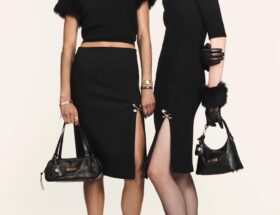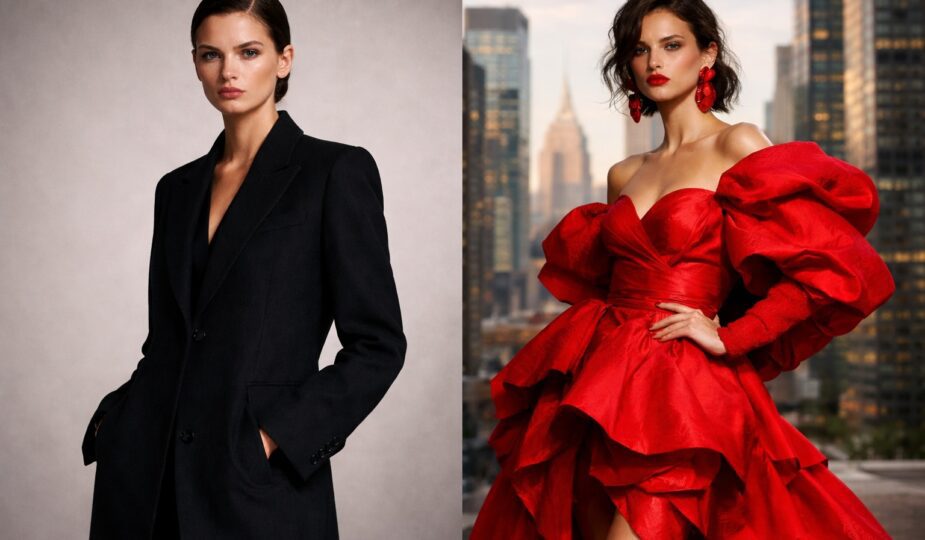
For decades, New York fashion has been synonymous with restraint. Clean tailoring, monochrome palettes, and clothes designed for real life rather than fantasy built the city’s global reputation. From the disciplined sensuality of Calvin Kleinto the pragmatic elegance of Donna Karan and the architectural precision of Narciso Rodriguez, American minimalism became more than an aesthetic. It became a philosophy.
But fashion is cyclical, and the pendulum has swung. Saturated color, layered styling, high-impact accessories, and performative runway moments are once again dominating global fashion weeks. In a digital landscape driven by virality, subtlety does not always translate.So how are New York’s minimalist brands evolving without abandoning their core identity
The Foundation: Precision Over Excess
New York minimalism was never about emptiness. It was about control. Neutral tones. Clean lines. Functional tailoring that moved from office to evening without theatrics. It reflected Manhattan’s pace and practicality.
What made it powerful was its discipline. A black coat cut to perfection needed no embellishment. A silk slip dress carried confidence without decoration. The message was clear: luxury lies in construction, not noise.That clarity is now being tested by a fashion system that rewards immediacy.
The Return of Visual Volume
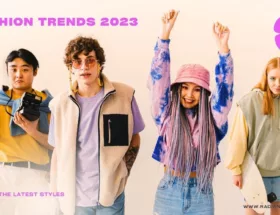
Across global runways, maximalism has resurfaced. Exaggerated proportions, layered prints, bold color blocking, and statement accessories dominate social feeds. This resurgence is not random.
Post-pandemic dressing has become expressive and extroverted. Social media favors pieces that command attention within seconds. Younger consumers embrace irony, nostalgia, and playful excess.
For brands built on understatement, the risk is twofold: remain too quiet and fade from the digital conversation, or pivot too aggressively and dilute brand equity.
Controlled Color as a Strategic Shift
Labels such as The Row and Khaite are not abandoning minimalism. They are expanding it.
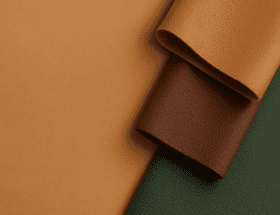
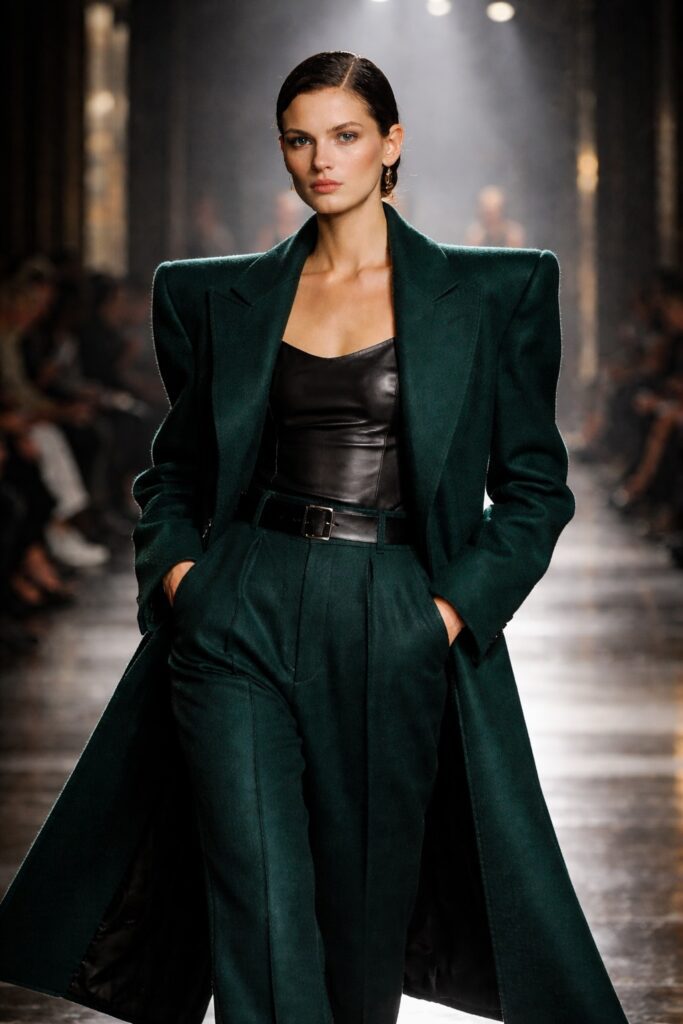
Rather than defaulting to black and ivory, designers are introducing saturated tones such as oxblood, saffron, and emerald. The silhouettes remain tailored and restrained, but color becomes a deliberate focal point.
This approach signals adaptability without surrender. The garment still speaks the language of structure and quality. It simply projects further.
Critically, this works because the intensity is balanced by simplicity. When color becomes the statement, everything else stays disciplined.
Texture Over Print
Instead of embracing loud patterns, New York designers are turning to material innovation. Matte wool against polished leather. Brushed cashmere paired with high-shine satin. Structured knits sculpted into architectural forms.
Texture offers dimension without abandoning minimalism’s core principle of visual clarity. It also performs well in close-up digital imagery, where fabric detail becomes content.This is a quieter form of maximalism. It invites inspection rather than demanding attention.
Sculptural Silhouettes Replace Decoration
If maximalism thrives on embellishment, New York minimalism counters with proportion. Oversized shoulders, elongated sleeves, cocoon coats, and exaggerated tailoring add drama without ornamentation.
Brands like Proenza Schouler have demonstrated that volume itself can be expressive. The result feels bold yet controlled.
The key insight is this: silhouette can create impact equal to print or embellishment, but with longer staying power.
The Cultural Layer: Quiet Luxury in a Loud Era
The rise of “quiet luxury” has paradoxically strengthened New York’s minimalist heritage. Understated brands signal cultural capital through discretion rather than logos.
In contrast to European houses leaning into overt branding and spectacle, American minimalism positions itself as intellectually confident. It assumes the wearer does not need validation through visibility.
Yet even quiet luxury must evolve. Today’s consumer wants both depth and dimension. The new minimalist codes allow for personality while maintaining restraint.
The Business Imperative
From a strategic perspective, this shift is not purely aesthetic. It is commercial.
Minimalist brands must:
- Remain distinct in an oversaturated market
- Perform visually across digital platforms
- Protect long-term brand equity
The strongest players understand that maximalism is cyclical. Rather than chasing trends, they reinterpret them through their own lens. Evolution, not reaction.For emerging New York labels, this balancing act is even more critical. Too safe, and they disappear. Too loud, and they lose credibility.
What This Means for the Season Ahead
New York minimalism is not dissolving. It is recalibrating.
Expect:
- Stronger, richer color stories
- Sculptural tailoring with architectural precision
- Elevated fabric contrasts
- Strategic statement accessories
The essence remains unchanged. Precision. Wearability. Urban intelligence.
In a world increasingly defined by visual excess, the most modern move may not be to compete with volume, but to refine it. New York’s minimalists are proving that boldness does not require noise. It requires clarity of identity.And in fashion, identity is always the ultimate luxury.