How Craftsmanship, Exclusivity and Controlled Growth Built a €16 Billion Luxury Business
THE BUSINESS OF LUXURY | COMPANY CASE STUDY
Founded: 1837
Founder: Thierry Hermès
Headquarters: Paris, France
Industry: Personal Luxury Goods
Executive Chairman: Axel Dumas
Business Structure: Family-controlled, publicly listed
2025 Revenue: €16.002 billion
2025 Operating Margin: 41%
1. Executive Summary
Hermès is one of the most distinctive businesses in the global luxury industry. Founded in Paris in 1837 as a harness workshop, the company has developed into an international luxury house offering leather goods, ready-to-wear, silk, watches, jewellery, perfumes and home products.
What makes Hermès particularly interesting is not simply its heritage or its famous Birkin and Kelly handbags. It is the relationship between craftsmanship, production capacity, distribution strategy, pricing power and financial performance.
In 2025, Hermès generated €16.002 billion in revenue, with growth of 8.9% at constant exchange rates. Its recurring operating income reached €6.569 billion, representing an operating margin of approximately 41%.
These figures demonstrate an unusual combination of growth and profitability.
The company has developed a business model in which production capacity is connected to skilled craftsmanship, distribution is predominantly controlled through its own retail network, and long-term brand desirability supports premium pricing.
However, this model also creates strategic challenges. Production cannot expand indefinitely without considering the availability of skilled artisans, manufacturing quality and the brand’s identity.
The central question is how Hermès has transformed traditional craftsmanship into a highly profitable and defensible business model while maintaining its position in the global luxury market.
2. Company History: From Saddlery to Global Luxury
Hermès was established in 1837 by Thierry Hermès in Paris. The original business specialised in producing high-quality harnesses and saddlery for European noblemen and horse-drawn carriages.
During the nineteenth century, horses played an important role in European transportation and aristocratic life. High-quality saddlery was therefore an important business.
Hermès developed its reputation through quality materials, technical precision, durability and exceptional craftsmanship.
In 1880, the business moved to 24 Rue du Faubourg Saint-Honoré, Paris, a location that remains central to its identity.
As transportation evolved and automobiles became increasingly important, Hermès gradually expanded into leather products, travel accessories and lifestyle categories.
Instead of abandoning its original expertise, the company transferred its knowledge of leather, construction and functionality into new product categories.
Important Historical Milestones
| Year | Development |
|---|---|
| 1837 | Thierry Hermès establishes his workshop in Paris. |
| 1880 | The business moves to 24 Faubourg Saint-Honoré. |
| 1920s | Expansion into leather goods and accessories. |
| 1937 | Introduction of the iconic Hermès Carré silk scarf. |
| 1976 | Development of the shoemaking business through John Lobb. |
| 1978 | Development of watchmaking activities. |
| 1984 | Introduction of the Birkin bag. |
| 1993 | Integration of Puiforcat. |
| 1995 | Integration of Saint-Louis. |
Business Insight: Hermès demonstrates how a luxury house can evolve without abandoning its original identity. Its expansion has largely been built around existing competencies in craftsmanship, materials and design.
3. Ownership and Corporate Governance
Unlike several major luxury brands owned by large conglomerates, Hermès maintains an independent, family-controlled structure.
As of 31 December 2025, its shareholding structure was:
| Shareholder | Share Capital |
|---|---|
| Hermès family group | 66.7% |
| Public shareholders | 32.6% |
| Treasury shares | 0.7% |
The family controls Hermès International through Émile Hermès SAS.
The company operates under a French legal structure known as Société en Commandite par Actions (SCA), or partnership limited by shares.
Family control influences the company’s long-term strategic direction in several ways.
Long-term investment: Management can prioritise manufacturing capabilities, training and infrastructure.
Brand protection: The family structure provides continuity in the company’s values and identity.
Strategic independence: Hermès does not need to integrate its brand strategy into a larger luxury conglomerate’s portfolio.
Investment in craftsmanship: The company can continue developing workshops and training programmes to support future growth.
Family ownership does not automatically guarantee superior performance. However, Hermès demonstrates how family control, financial strength and strategic consistency can work together.
4. Business Model: How Hermès Makes Money
Hermès operates through several business categories known as métiers.
Its portfolio includes leather goods, ready-to-wear, silk, watches, jewellery, perfumes, beauty products and home accessories.
However, these categories do not contribute equally to revenue.
Revenue by Business Segment: FY2025
| Business Segment | Revenue | Share |
|---|---|---|
| Leather Goods & Saddlery | €7.070 billion | 44% |
| Ready-to-wear & Accessories | €4.525 billion | 28% |
| Other Hermès sectors | €2.055 billion | 13% |
| Silk & Textiles | €964 million | 6% |
| Watches | €549 million | 4% |
| Perfume & Beauty | €489 million | 3% |
| Other products | €349 million | 2% |
| Total | €16.002 billion | 100% |
Source: Hermès 2025 Universal Registration Document.
Leather goods and saddlery represent approximately 44% of total revenue, making them the company’s largest business segment.
Ready-to-wear and accessories contribute another 28%.
Together, these two categories account for approximately 72% of total revenue.
This demonstrates that Hermès is diversified, but remains strongly supported by its core leather goods business.
Its other métiers strengthen the wider brand universe and provide additional commercial opportunities.
Business Insight: Diversification does not necessarily mean reducing dependence on the core business. It can also mean using a strong core business to support complementary categories.
5. Craftsmanship: The Foundation of the Business
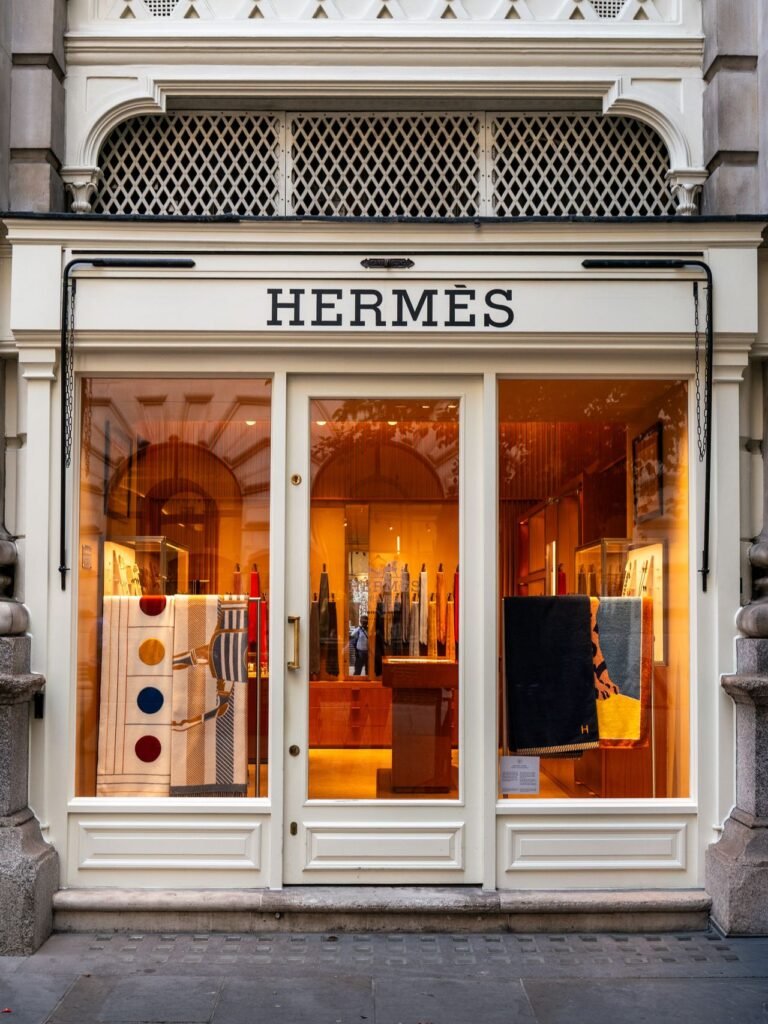
One of the strongest characteristics of Hermès is its relationship with manufacturing.
The company places considerable emphasis on internal production, artisan training and long-term specialist relationships.
Its manufacturing strategy is closely connected to its brand identity.
At the end of 2025:
- Hermès had more than 20 leather goods workshops.
- Its production network was organised around 10 regional centres of expertise.
- It operated 12 Écoles Hermès des savoir-faire training schools.
- New leather goods workshops are designed to create approximately 300 jobs each.
The company opened its twenty-fourth leather goods workshop in L’Isle-d’Espagnac during 2025.
Why Does Production Control Matter?
Quality control: The company can maintain consistent manufacturing standards.
Know-how protection: Specialist techniques remain within its production ecosystem.
Traceability: Greater visibility over production processes and materials.
Supply security: Long-term manufacturing relationships can strengthen supply-chain resilience.
Brand authenticity: The production model reinforces the company’s craftsmanship positioning.
In 2025, approximately 75% of Hermès products were manufactured in France, while 100% of its leather goods products were manufactured in France.
Source: Hermès Finance and 2025 corporate reporting.
The Economic Importance of Craftsmanship
Craftsmanship is often discussed as a cultural or artistic characteristic. However, in the Hermès case, it is also an economic resource.
The company’s investment in workshops and training helps protect production knowledge and maintain product quality.
Competitors can reproduce the appearance of a handbag, but replicating the entire manufacturing ecosystem, artisan expertise and organisational knowledge is considerably more difficult.
Business Insight: Hermès has transformed craftsmanship into a strategic barrier to entry.
6. The Birkin and Kelly: The Economics of Desirability
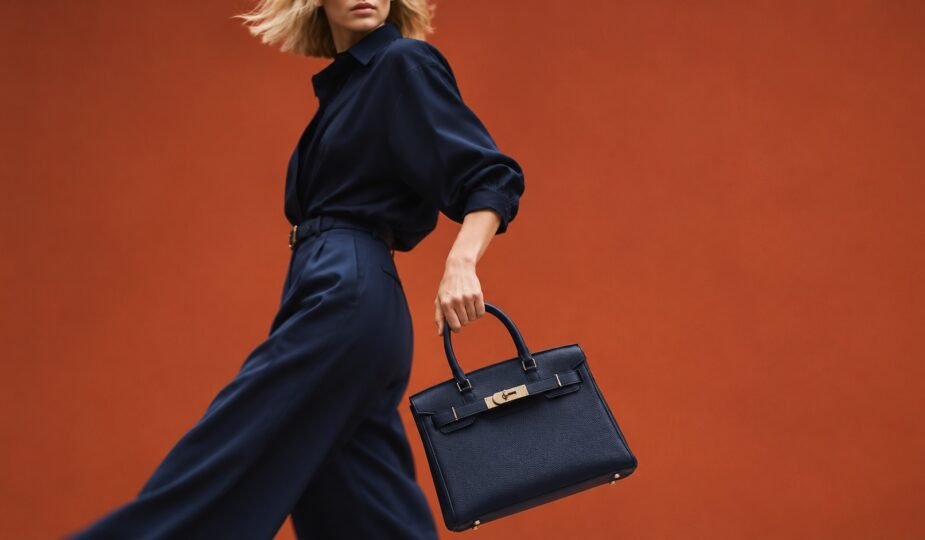
The Birkin and Kelly are two of the most recognisable products in the global luxury industry.
Their commercial importance goes beyond their individual sales. They contribute to Hermès’ identity, desirability and cultural relevance.
The Birkin: 1984
The Birkin was introduced in 1984 following an encounter between actress Jane Birkin and Jean-Louis Dumas, then Executive Chairman of Hermès.
During a flight from Paris to London, Jane Birkin discussed the difficulty of finding a practical and elegant everyday bag.
Dumas developed a design based on her requirements.
The resulting handbag combined functionality with the company’s established leather craftsmanship.
The Kelly
The Kelly originated as the Sac à dépêches.
Its association with Princess Grace Kelly of Monaco helped establish its international cultural identity.
The bag subsequently became known as the Kelly and developed into one of the house’s signature products.
Why Are These Products So Powerful?
| Factor | Business Significance |
|---|---|
| Heritage | Connects products to the history of the house. |
| Design | Creates recognisable and enduring product identities. |
| Craftsmanship | Supports perceived quality and value. |
| Exclusivity | Reinforces desirability and differentiation. |
| Cultural relevance | Maintains visibility across generations. |
| Resale interest | Creates additional consumer and collector attention. |
Understanding Scarcity
Scarcity is often discussed as one of the foundations of Hermès’ success.
However, it is important to distinguish between two types of scarcity.
Capacity-constrained scarcity: Production is limited by manufacturing capacity, skilled labour, materials and quality standards.
Artificial scarcity: A company deliberately restricts supply to influence demand and perceived exclusivity.
It would be inaccurate to assume that every instance of limited Birkin or Kelly availability is evidence of deliberate artificial scarcity.
Hermès’ production strategy places significant emphasis on craftsmanship, training and controlled manufacturing expansion.
Business Insight: The Birkin and Kelly demonstrate how a luxury product can become more than a functional object. They operate simultaneously as fashion products, cultural symbols, brand assets and expressions of craftsmanship.
7. Pricing Strategy: Why Customers Pay More
Pricing is one of the most important elements of luxury management.
In conventional consumer markets, businesses often compete through discounts, promotions and price reductions.
Luxury companies operate differently.
Hermès’ pricing strategy is supported by product quality, craftsmanship, brand equity, exclusivity and customer willingness to pay.
Sources of Perceived Value
- Product design.
- Manufacturing quality.
- Brand heritage.
- Symbolic value.
- Exclusivity.
- Customer experience.
- Brand reputation.
The price of an Hermès product is not determined exclusively by the cost of leather, labour or materials.
Its perceived value also includes the brand identity and cultural meaning associated with the product.
Pricing Power
Pricing power refers to a company’s ability to increase prices without experiencing a proportionate reduction in demand.
Hermès benefits from several characteristics that support pricing power:
- Strong brand recognition.
- Established product icons.
- High perceived quality.
- Controlled distribution.
- Loyal customers.
- Distinctive craftsmanship.
However, pricing power should not be confused with unlimited pricing freedom.
Even highly desirable brands face limits related to customer expectations, competition, economic conditions and perceived value.
Business Insight: Hermès’ pricing advantage is supported by its entire business model. Pricing power is an outcome of strategic execution rather than an independent marketing decision.

8. Distribution Strategy: Controlling the Customer Experience
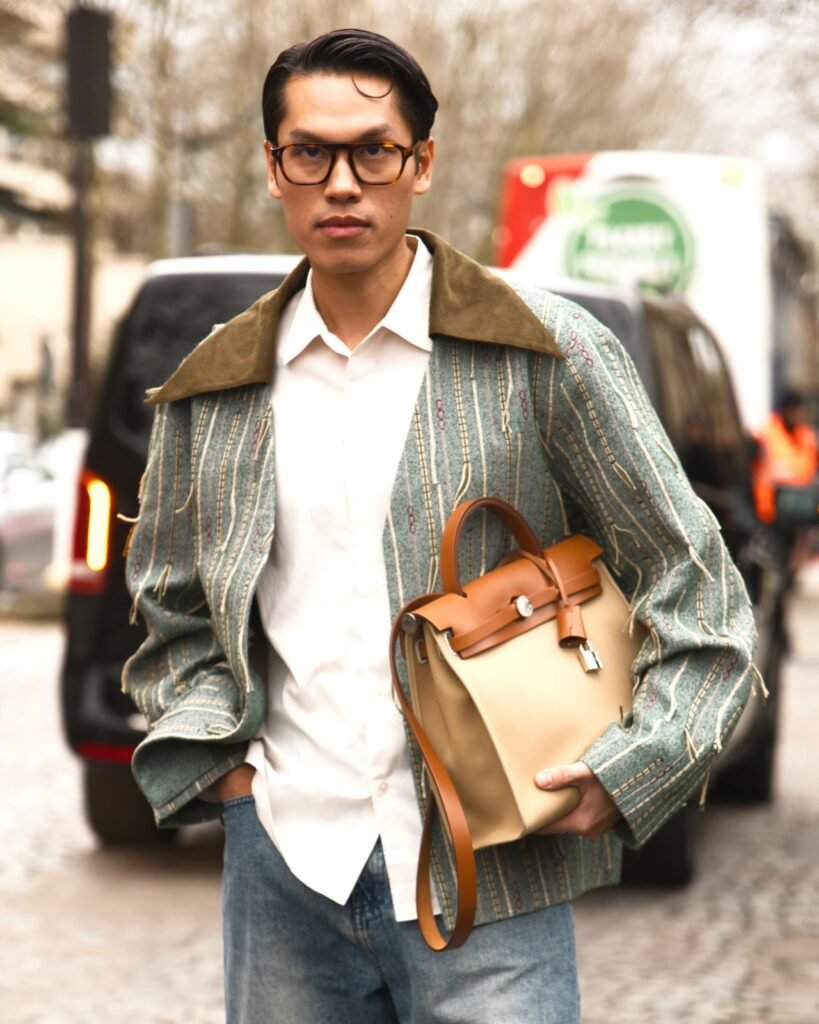
Hermès follows a selective distribution strategy supported by its global retail network and e-commerce platforms.
The company operates predominantly through directly managed stores.
Its strategy allows greater control over how products are presented, sold and experienced.
According to its corporate strategy reporting, Hermès operated 294 stores worldwide, with its own retail branches representing more than 92% of revenue.
Why Direct Distribution Matters
Brand presentation: The company controls how products are displayed.
Customer relationships: Retail employees can develop long-term relationships with customers.
Pricing consistency: The company maintains greater control over pricing.
Customer information: Direct retail and e-commerce channels provide opportunities to understand purchasing behaviour.
Experience management: The company can create distinctive retail environments across markets.
Omnichannel Strategy
Omnichannel retail connects physical stores and digital channels into a coordinated customer experience.
For Hermès, digital platforms complement physical boutiques.
They communicate the brand’s universe through product presentation, storytelling, editorial content and customer services.
The challenge is to make shopping more convenient while maintaining the exclusivity and personal attention associated with physical retail.
Business Insight: Distribution control is also brand control.
9. Financial Performance: Understanding the Business
Hermès’ financial performance demonstrates how its business model translates into commercial results.
Five-Year Revenue Development
| Financial Year | Revenue |
|---|---|
| 2021 | €8.982 billion |
| 2022 | €11.602 billion |
| 2023 | €13.427 billion |
| 2024 | €15.170 billion |
| 2025 | €16.002 billion |
Hermès increased annual revenue from approximately €9 billion in 2021 to €16 billion in 2025.
However, its growth rate has moderated as the company has expanded.
For 2025:
- Reported revenue growth: 5.5%.
- Constant-currency revenue growth: 8.9%.
The difference demonstrates the impact of foreign exchange movements.
Profitability Analysis
| Financial Indicator | 2024 | 2025 |
|---|---|---|
| Revenue | €15.170bn | €16.002bn |
| Gross margin | €10.660bn | €11.379bn |
| Gross margin percentage | 70.3% | 71.1% |
| Recurring operating income | €6.150bn | €6.569bn |
| Operating margin | 40.5% | 41.0% |
| Net profit attributable to owners | €4.603bn | €4.524bn |
| Operating cash flow | €5.378bn | €5.607bn |
| Adjusted free cash flow | €3.767bn | €3.880bn |
Source: Hermès 2025 financial statements.
Gross Margin
Gross margin represents revenue remaining after deducting the direct cost of sales.
Hermès achieved a gross margin of approximately 71% in 2025.
This means that for every €100 in revenue, approximately €71 remained after accounting for the cost of sales.
Operating Margin
Operating margin measures the proportion of revenue remaining after operating expenses.
Hermès achieved a recurring operating margin of approximately 41%.
In simple terms, it generated approximately €41 in recurring operating income for every €100 in revenue.
Net Profit
Net profit attributable to owners decreased from €4.603 billion in 2024 to €4.524 billion in 2025.
However, the 2025 result included an exceptional French tax contribution affecting large companies.
Adjusted for this contribution, net profit attributable to owners reached approximately €4.86 billion.
Cash Generation
Hermès generated:
- €5.607 billion in operating cash flow.
- €3.880 billion in adjusted free cash flow.
- €12.239 billion in net cash position.
These figures indicate a strong financial position.
Its cash generation provides flexibility to invest in manufacturing, retail infrastructure, technology and other strategic priorities.
Financial Conclusion: Hermès combines high gross margins, strong operating profitability, significant cash generation and substantial financial resources. This financial strength supports the continuation of its craftsmanship-based operating model.
10. Latest Business Performance: First Nine Months of 2026
As of 26 November 2026, Hermès’ latest published revenue results cover the first nine months of 2026.
The company reported revenue of €12.260 billion, compared with €11.916 billion during the same period in 2025.
Growth was:
- 2.9% at current exchange rates.
- 5.5% at constant exchange rates.
The third quarter generated €4.096 billion in revenue.
Performance by Business Segment
| Business Segment | Revenue, Jan–Sep 2026 | Growth at Constant Exchange Rates |
|---|---|---|
| Leather Goods & Saddlery | €5.673bn | +10.2% |
| Ready-to-wear & Accessories | €3.340bn | +0.6% |
| Silk & Textiles | €683m | +7.0% |
| Other Hermès sectors | €1.551bn | +3.3% |
| Perfume & Beauty | €361m | -0.7% |
| Watches | €393m | -1.9% |
| Other products | €260m | +5.4% |
| Total | €12.260bn | +5.5% |
Source: Hermès Q3 2026 revenue announcement.
Leather goods remain the strongest major growth engine.
Meanwhile, watches and perfumes and beauty experienced negative constant-currency growth during the nine-month period.
This demonstrates that different business categories do not necessarily follow identical demand patterns.
Geographic Performance
| Geographic Area | Revenue, Jan–Sep 2026 | Growth at Constant Exchange Rates |
|---|---|---|
| France | €1.171bn | +2.4% |
| Europe excluding France | €1.852bn | +9.0% |
| Japan | €1.200bn | +10.5% |
| Asia-Pacific excluding Japan | €5.182bn | +1.6% |
| Americas | €2.376bn | +13.1% |
| Other, mainly Middle East | €479m | -4.3% |
| Total | €12.260bn | +5.5% |
The Americas and Japan were important growth markets during the first nine months of 2026.
Meanwhile, Asia-Pacific excluding Japan recorded relatively modest growth.
This is significant because the region represented 42% of Hermès’ total revenue in 2025.
A prolonged slowdown in this region could influence the company’s future growth.
Business Insight: Geographic diversification is important even for highly desirable luxury brands because consumer demand varies across markets.
11. Competitive Analysis: Hermès vs Louis Vuitton vs Chanel
Hermès competes with several major luxury houses. However, each operates through a different business structure.
| Strategic Dimension | Hermès | Louis Vuitton | Chanel |
|---|---|---|---|
| Ownership | Family-controlled | Part of LVMH | Private ownership |
| Foundation | 1837 | 1854 | 1910 |
| Core identity | Craftsmanship and heritage | Travel, fashion and luxury lifestyle | Fashion, heritage and elegance |
| Main business strength | Leather goods | Fashion and leather goods | Fashion and accessories |
| Distribution | Highly controlled direct network | Global retail and digital network | Controlled retail distribution |
| Brand architecture | Independent luxury house | Brand within a luxury group | Independent luxury house |
| Strategic emphasis | Controlled, long-term growth | Global scale and brand development | Independent brand development |
What Makes Hermès Different?
1. Production philosophy
Hermès places considerable emphasis on craftsmanship and internal manufacturing capabilities.
2. Business architecture
It operates as an independent luxury house rather than one brand within a large luxury conglomerate.
3. Product desirability
Its major leather goods products have developed exceptional cultural and commercial importance.
4. Financial profitability
Its 41% recurring operating margin demonstrates the strength of its business economics.
A financial comparison requires caution.
LVMH does not publish a separate, directly comparable standalone revenue figure for Louis Vuitton. Its Fashion & Leather Goods business group generated €37.770 billion in 2025, but this includes multiple brands.
Similarly, Chanel publishes company-wide financial results rather than equivalent isolated fashion and leather goods figures.
Therefore, comparing the LVMH business-group figure directly with Hermès’ revenue would be misleading.
Business Insight: Hermès does not need to become the largest luxury business by revenue to be commercially powerful. Its strategy focuses on maintaining a distinctive position through craftsmanship, brand equity, distribution control and profitability.
12. Brand Equity and Consumer Behaviour
Why do customers want Hermès?
The answer involves more than product quality.
Luxury purchasing behaviour is influenced by several motivations.
Functional value: Customers expect high-quality materials, durability, design and craftsmanship.
Emotional value: Products create emotional connections through heritage, design and personal meaning.
Symbolic value: Luxury products can communicate identity, taste, wealth and social positioning.
Experiential value: The retail environment, customer relationships and purchase experience contribute to perceived value.
Collectability: Some customers view specific Hermès products as collectible objects.
However, it is important not to assume that all Hermès products appreciate in value or constitute reliable investments.
Secondary-market prices vary according to product condition, material, size, colour, rarity and market demand.
Academic Perspective
Jean-Noël Kapferer and Vincent Bastien, in The Luxury Strategy, discuss how luxury brands need to manage desirability differently from conventional premium businesses.
A luxury brand cannot depend entirely on accessibility, promotional activity or conventional volume growth.
Its positioning depends on maintaining a distinctive identity and managing the relationship between demand, availability and perceived value.
Hermès offers a particularly interesting example of these principles.
13. Sustainability and Responsible Luxury
Sustainability is becoming an increasingly important strategic issue for luxury businesses.
Hermès’ approach is closely connected to its manufacturing model.
The company emphasises product longevity, repairability, responsible sourcing, material traceability, supplier relationships and craftsmanship preservation.
Supply-Chain Relationships
Hermès reported that its average relationship with its top 50 direct purchasing suppliers was 21 years in 2025.
It also reported that 90% of its Tier 1 leather suppliers were Leather Working Group certified.
These figures demonstrate an emphasis on long-term supplier relationships and environmental standards.
However, supplier certification should not automatically be interpreted as proof that the entire supply chain is sustainable.
It is necessary to examine certification scope, material traceability, animal welfare and environmental impacts across the wider value chain.
Climate Performance
Hermès reported the following environmental indicators for 2025:
| Indicator | Reported Result |
|---|---|
| Scope 1 and 2 emissions | -69% versus 2018 |
| Scope 3 emissions intensity | -58% versus 2018 |
| Industrial water intensity | -64% over 10 years |
These figures use different measurement bases and should not be treated as directly comparable absolute emissions reductions.
Critical Perspective
Hermès’ business model has certain characteristics that can support responsible luxury:
- Longer product lifecycles.
- Repairability.
- Skilled local employment.
- Material traceability.
- Long-term supplier relationships.
Nevertheless, leather sourcing, animal welfare, biodiversity and resource consumption remain important challenges.
The sustainability performance of a luxury product must be evaluated across its entire lifecycle, not only through its durability or country of manufacture.
Business Insight: Longevity can contribute to sustainable luxury, but it does not independently establish that a product or business is environmentally sustainable.
14. Strategic Risks and Business Challenges
Despite its strong position, Hermès faces several strategic challenges.
1. Dependence on Leather Goods
Leather goods accounted for 44% of revenue in 2025.
This provides a powerful revenue engine but also creates category concentration.
A significant change in demand for leather products could affect overall performance.
Strategic consideration: Continue developing other métiers while protecting the strength of leather goods.
2. Production Capacity
The craftsmanship model depends on skilled artisans.
Training takes time, and expanding production too quickly could place pressure on quality and manufacturing standards.
Strategic consideration: Invest in training institutions, workshops and long-term recruitment.
3. Geographic Concentration
Asia-Pacific excluding Japan represented 42% of 2025 revenue.
This creates exposure to regional economic conditions, consumer confidence and geopolitical developments.
Strategic consideration: Maintain geographic diversification and develop other growth markets.
4. Brand Dilution
Increasing product availability and entering new categories could potentially weaken perceptions of exclusivity.
Strategic consideration: Maintain control over product quality, distribution and brand presentation.
5. Sustainability and Raw Materials
The company relies on high-quality natural materials.
Their availability, traceability and environmental impact are long-term strategic concerns.
Strategic consideration: Strengthen responsible sourcing, supplier relationships and material innovation.
6. Succession and Governance
Family-controlled businesses need to preserve their values while adapting to new generations of leadership.
The challenge is maintaining continuity without limiting organisational evolution.
Strategic consideration: Develop professional management capabilities while maintaining the governance principles that support the company’s independence.
15. Application of Luxury Management Theory
The Hermès case can be understood through several important academic concepts.
| Academic Concept | Application to Hermès |
|---|---|
| Brand Equity | Strong brand associations support customer preference and perceived value. |
| Scarcity and Exclusivity | Controlled availability contributes to desirability. |
| Vertical Integration | Production control supports quality, traceability and know-how. |
| Heritage Marketing | Historical identity provides authenticity and differentiation. |
| Symbolic Consumption | Products communicate identity, status and personal taste. |
| Selective Distribution | Direct retail strengthens control over customer experience. |
| Pricing Power | Brand desirability and perceived value support premium pricing. |
| Sustainable Luxury | Durability, repairability and responsible sourcing influence long-term value. |
| Corporate Governance | Family ownership supports strategic independence and continuity. |
Recommended Academic Reading
The Luxury Strategy
Jean-Noël Kapferer and Vincent Bastien.
Useful for understanding luxury positioning, exclusivity, pricing and brand management.
Luxury Brand Management in Digital and Sustainable Times
Michel Chevalier and Gérald Mazzalovo.
Useful for analysing luxury business development, digital transformation and sustainability.
The Road to Luxury
Ashok Som and Christian Blanckaert.
Useful for examining the strategic and managerial characteristics of luxury businesses.
The Management of Luxury
Edited by Benjamin Berghaus, Günter Müller-Stewens and Sven Reinecke.
Useful for understanding the organisational and managerial dimensions of luxury companies.
16. Strategic Analysis: What Is the Real Competitive Advantage of Hermès?
After examining its history, business model, production structure, financial performance and distribution strategy, several conclusions emerge.
16.1 An Integrated Luxury Ecosystem
Hermès’ competitive advantage does not come from one product or one marketing campaign.
It comes from the relationship between multiple business activities.
Heritage → Creative Identity → Craftsmanship → Product Desirability → Controlled Distribution → Customer Relationships → Pricing Power → Profitability → Investment in Future Capabilities
This is a reinforcing business system.
Its strength is that individual components support one another.
16.2 Craftsmanship Is an Economic Asset
Craftsmanship is often discussed as a cultural or artistic characteristic.
However, in the Hermès case, it is also an economic resource.
The company’s investment in workshops and training helps protect production knowledge and maintain product quality.
16.3 Exclusivity Is Connected to Operations
Hermès’ exclusivity should not be analysed only through marketing.
Its manufacturing capacity, artisan training, materials and distribution strategy all influence product availability.
This makes its exclusivity deeply connected to its business operations.
16.4 Financial Discipline Supports Brand Independence
Hermès’ strong cash generation and profitability allow it to finance strategic investments.
This reduces the pressure to pursue growth through excessive external financing or uncontrolled expansion.
Its financial model therefore supports its long-term brand strategy.
16.5 Managing Success Is the Biggest Challenge
Hermès faces an unusual challenge.
The stronger its desirability becomes, the greater the pressure to expand production and retail availability.
However, excessive expansion could weaken the characteristics that make its business successful.
Its long-term success will depend less on how quickly it can increase production and more on how effectively it can expand its capabilities without weakening the quality and identity of the house.
17. Final Assessment: The Hermès Business Model
| Evaluation Area | Assessment |
|---|---|
| Brand heritage | Very strong |
| Brand positioning | Very strong |
| Craftsmanship capabilities | Very strong |
| Distribution control | Very strong |
| Financial profitability | Very strong |
| Geographic diversification | Strong, with regional concentration |
| Product diversification | Strong |
| Sustainability | Positive initiatives, with ongoing supply-chain challenges |
| Long-term competitive position | Strong |
| Production scalability | Constrained by craftsmanship requirements |
These are qualitative strategic assessments based on the evidence examined, not externally published ratings.
Conclusion
Hermès represents one of the strongest examples of how a luxury company can convert craftsmanship and heritage into commercial value.
Its business model is distinctive because its product development, manufacturing, distribution and brand identity are closely connected.
The company has also demonstrated that luxury profitability does not necessarily require the largest production volumes or the widest distribution network.
Its 2025 operating margin of 41% provides measurable evidence of the financial strength of its approach.
However, its future success is not guaranteed. Production capacity, raw material availability, geographic exposure and the challenge of maintaining exclusivity during expansion will remain important strategic considerations.
The most important lesson from Hermès is that luxury is not simply about selling expensive products. It is about building a business in which product quality, brand desirability, operational capabilities and financial discipline reinforce one another.
That is what makes Hermès an important case study in the Business of Luxury.
18. Key Takeaways for Luxury Management
- Heritage must evolve: Historical identity becomes valuable when it continues to influence contemporary products and business decisions.
- Craftsmanship creates competitive advantage: Skilled labour and manufacturing knowledge can become difficult-to-replicate business assets.
- Distribution is strategic: Controlling retail channels provides greater influence over pricing, customer relationships and brand presentation.
- Scarcity requires operational understanding: Product availability must be analysed alongside production capacity and manufacturing constraints.
- Diversification needs coherence: New categories should strengthen the existing brand identity rather than weaken it.
- Profitability matters: Revenue growth alone does not determine business quality.
- Sustainability requires evidence: Product longevity and local production are valuable, but complete environmental performance requires wider assessment.
- Long-term governance matters: Ownership and management structures can influence investment decisions and brand continuity.
19. Research Sources and References
Primary Sources: Hermès
- Hermès, 2025 Universal Registration Document.
https://assets-finance.hermes.com/s3fs-public/node/pdf_file/2026-04/1777391712/260320_hermes_urd2025_en.pdf - Hermès, 2025 Full-Year Results.
https://live.euronext.com/en/products/equities/company-news/2026-02-12-hermes-international-2025-full-year-results - Hermès Financial Information.
https://finance.hermes.com/en/key-figures/ - Hermès Corporate Strategy.
https://finance.hermes.com/en/strategy/ - Hermès Materials and Supply Chains.
https://finance.hermes.com/en/materials-and-supply-chains/ - Hermès Q3 2026 Results.
https://assets-finance.hermes.com/s3fs-public/node/pdf_file/2026-10/1792602512/hermes_20261022_revenue_q3_en.pdf - Hermès Q3 2026 Financial Announcement.
https://www.globenewswire.com/news-release/2026/10/22/3386040/0/en/herm%C3%A8s-international-third-quarter-2026-revenue.html
Academic References
- Kapferer, J.-N. and Bastien, V. The Luxury Strategy.
- Chevalier, M. and Mazzalovo, G. Luxury Brand Management in Digital and Sustainable Times.
- Som, A. and Blanckaert, C. The Road to Luxury.
- Berghaus, B., Müller-Stewens, G. and Reinecke, S. (eds.). The Management of Luxury.
THE BUSINESS OF LUXURY (BOL)
Understanding how luxury brands build, manage and sustain their businesses.
Research note: This case study uses FY2025 financial statements and the latest available Q3 2026 revenue disclosures. Full-year 2026 profitability figures were not yet available as of 26 November 2026. Financial figures are company-reported; strategic assessments represent analytical interpretations.